The same stone can look completely different depending on its finish. Polished countertops reflect light, highlighting color and veining. Honed countertops offer a smooth, matte surface with a softer appearance. Leathered countertops add texture and a low sheen that emphasize the stone’s natural character. Each can make a beautiful addition to a kitchen or bathroom. The right choice comes down to your style and everyday routine.
Beyond appearance, the finish can affect how noticeable fingerprints, smudges and everyday wear become. Honed surfaces may disguise fine scratches, while darker matte colors can show oils and fingerprints. Polished surfaces can highlight streaks and water spots. Leathered textures may help disguise some marks, but deeper grooves can require extra attention when cleaning.
Care depends on both the material and the finish. Let’s explore the benefits, trade-offs and care tips to help you choose the right combination for your home.
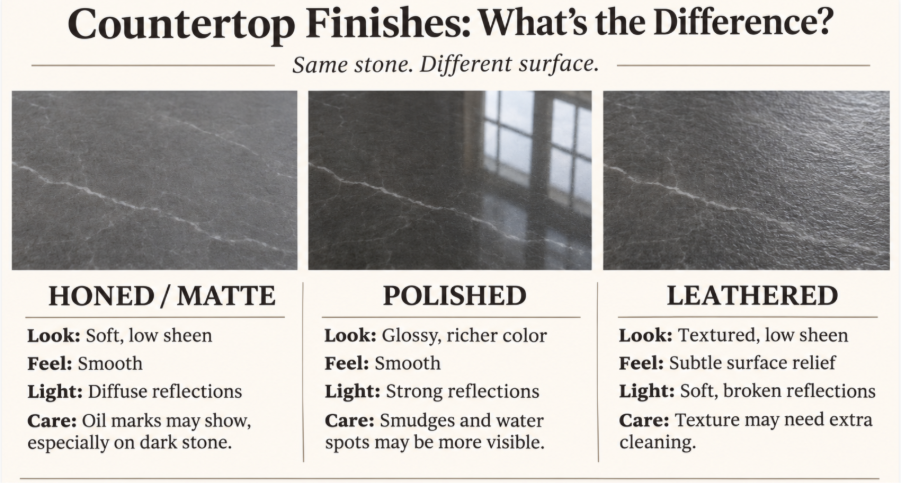
What’s the Difference Between Polished, Honed/Matte and Leathered Finishes?
Before comparing the pros, cons and care requirements, it helps to understand what each finish means.
Polished
The surface is finished with progressively finer abrasives to create a smooth, glossy shine. This reflective finish emphasizes the stone’s color and veining. Check out our catalogue.
Honed (matte)
Honed stone is finished without the final polishing steps that create a high shine. The result is a smooth surface with little or no reflection. “Honed” is commonly used for natural stone, while quartz manufacturers often use “matte.” The exact sheen and feel vary by product. Check out our catalogue.
Leathered
The stone is brushed to create a textured surface, typically with a low sheen. Unlike the smooth feel of honed stone, a leathered finish has subtle variations you can feel when you run your hand across it. Check out our catalogue.
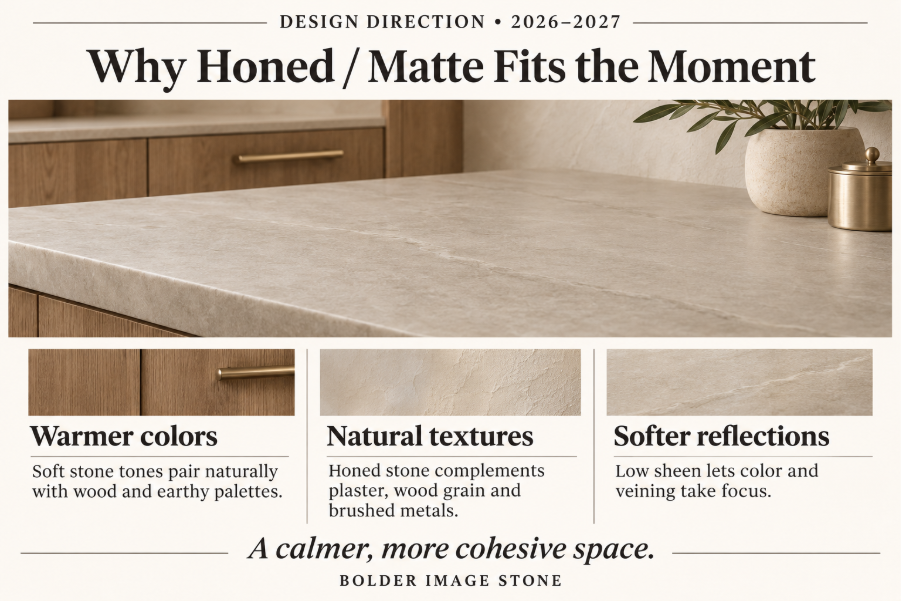
As kitchen design moves toward warmer colors, natural textures and softer finishes, matte countertops fit beautifully into that direction. Their appeal goes beyond appearance: designers use low-sheen surfaces to reduce visual distractions and create a calmer, more cohesive space.
A honed finish softens light rather than creating strong reflections, allowing the stone’s color and veining to take focus. Paired with wood cabinetry, plaster walls and brushed metals, it adds depth without overwhelming the room. It also balances glossy tile and metallic accents, giving the design contrast without competing for attention.
The numbers point the same way. In the 2026 U.S. Houzz Kitchen Trends Study, which surveyed 1,780 homeowners in July 2025, wood overtook white as the most popular cabinet color (29% vs. 28%), and off-white countertops rose to 26% of choices, up from 23% the year before. Among homeowners who gave their island a different countertop from the rest of the kitchen, 44% chose butcher block or wood. Warm, natural materials are gaining ground, and low-sheen stone sits comfortably alongside them.
Looking toward 2027, matte countertops offer a way to bring warmth and understated detail into kitchens and bathrooms. The effect is a space that feels inviting, thoughtfully layered and centered on the beauty of its materials.
Advantages of Honed/Matte Countertops
- Soft, natural appearance. Pairs beautifully with wood, earthy colors and textured finishes.
- Less glare. Reduces reflections from sunlight and overhead lighting.
- Disguises fine scratches. Minor scratches may blend in more easily, although the finish does not prevent them.
- Makes marble etching less obvious. Acid marks can be less noticeable on honed marble. Neither honing nor sealing prevents etching.
Disadvantages and Care Considerations
- Fingerprints and oil may show. Especially on darker colors; some surfaces need extra wiping to remove residue.
- Care depends on the material. Honed natural stone may require sealing. Engineered quartz generally does not.
- Metal marks can occur on matte quartz. Cookware may leave gray marks. Follow the manufacturer’s cleaning instructions.
- Matte does not mean more durable. Heat, stain and scratch resistance depend primarily on the material.
- Availability varies. Not every color comes in a matte finish. Confirm your options before planning around a specific look.
Before choosing, compare samples for texture and sheen, then [LINK INTERNO: blog “Why You Should Never Choose Your Countertop From a Small Sample”, com texto âncora “view the full slab”] for color and movement.
Advantages and Disadvantages of Polished Countertops
A polished finish adds shine and highlights the stone’s details. Here’s what to consider for everyday use.
Advantages
- Enhances color and veining. Brings out richer tones and makes patterns more defined.
- Easy daily cleaning. A smooth surface makes spills and residue easy to wipe away with a suitable cleaner.
- Reflects light. Can help a kitchen or bathroom feel brighter.
- Versatile appearance. Complements traditional, contemporary and elegant designs.
Disadvantages and Care Considerations
- Can create glare. Reflections may be noticeable near sunny windows or under strong lighting.
- May highlight scratches and smudges. Fine scratches, streaks and water spots can stand out, especially on dark colors.
- Makes marble etching more visible. Acidic spills, such as lemon juice or vinegar, can leave dull spots that contrast with the shine. Sealing does not prevent etching.
- Polished natural stone may still need sealing. A glossy finish does not stop oil, wine or other spills from staining absorbent stone. Sealing needs vary by stone type, and spills should be wiped up promptly.
Attention: quartz does not need sealing. Engineered quartz is nonporous, whether polished or matte. Do not apply sealer, as it can leave residue or affect the surface’s appearance.
Advantages of Leathered Countertops
- Natural texture and low sheen. Adds depth and a tactile feel without a glossy reflection.
- Less glare. Softens reflections from windows and overhead lighting.
- Can disguise everyday marks. The texture may make fingerprints and smudges less noticeable, depending on the stone and color.
- Highlights the stone’s character. Complements wood cabinetry, earthy colors and other natural materials.
Disadvantages and Care Considerations
- Texture can require extra cleaning. Crumbs and residue may collect in grooves, especially on more deeply textured surfaces.
- The feel varies by slab. Some leathered stones have a subtle texture; others are more pronounced. See and touch the actual slab before choosing.
- Natural stone may need sealing. Leathering does not prevent staining. Sealing needs depend on the stone’s absorption.
- Texture does not prevent damage. Marble can still etch, and heat and scratch resistance depend primarily on the material.
- Availability varies. Not every stone or color comes in a leathered finish.
Attention: leathered does not mean maintenance-free.
Dark colors can still show oil, residue and water marks. Clean with a product suitable for your stone, remove residue from the texture and dry with a soft cloth.
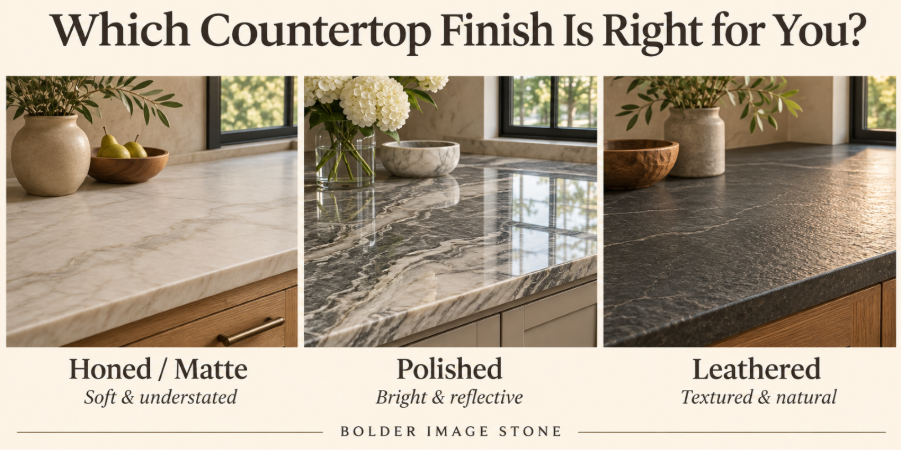
Choose honed or matte for a softer look with less glare. It pairs beautifully with wood, earthy colors and natural textures. Designer tip: view dark matte samples under your lighting, where fingerprints and oil may be more noticeable.
Choose polished to make color and veining stand out. Its reflective surface adds visual impact to countertops, vanities and statement islands. Designer tip: pair a bold polished slab with quieter cabinetry and surrounding finishes.
Choose leathered for texture and natural character. Its low sheen and tactile surface add depth to a space. Designer tip: touch the actual slab before choosing, since more pronounced texture may require extra attention when cleaning.
Let trends inspire you, but choose for the way you live. Compare finishes alongside your cabinet and flooring samples, and ask about the care requirements of the specific material you love.
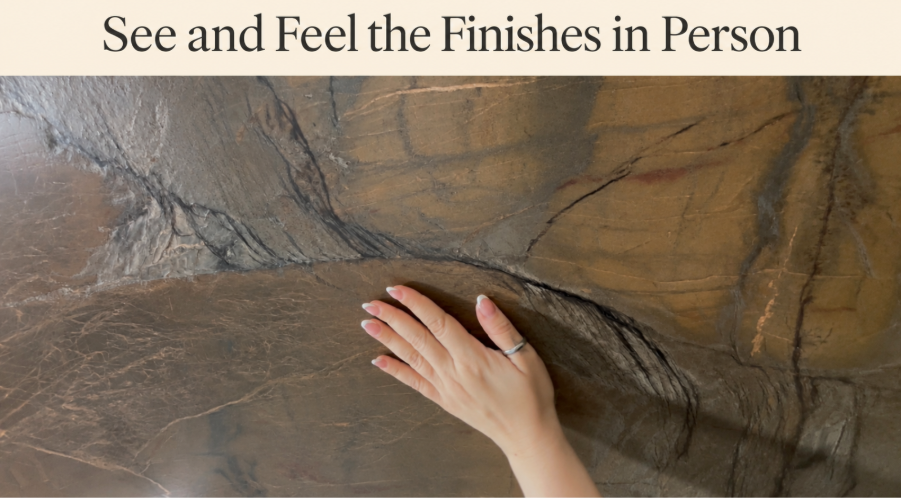
Comparing honed, polished and leathered countertops is about more than choosing a level of shine. Each finish changes how you experience the stone—from its texture and reflections to how noticeable everyday marks become.
The right choice brings together your style, your material and the care that fits your routine. Photos can only tell you so much. At our Phoenix showroom, you can feel the smoothness of honed stone, see how polishing brings out color and veining, and explore the texture of leathered surfaces—all while viewing full slabs.
Bring your cabinet samples, flooring selections or inspiration photos. Our team at Bolder Image Stone will help you compare your options and find the material and finish that feel right for your project. Visit our Phoenix showroom to see and feel the differences for yourself. Your vision starts here.
Frequently Asked Questions
What is the difference between honed and polished countertops?
Polished surfaces are glossy and reflective, emphasizing color and veining. Honed surfaces are smooth with little or no shine, creating a softer appearance.
Is a matte countertop the same as honed?
For natural stone, “honed” generally describes a smooth, matte finish. Quartz manufacturers commonly use “matte,” though the exact sheen and texture vary by product.
Do honed and matte countertops show fingerprints?
They can, especially on dark or solid colors. Oil, fingerprints and cleaning residue may be noticeable. Clean with a suitable product and dry with a microfiber cloth to reduce streaks.
Are honed countertops harder to maintain?
Not necessarily. Care depends on the material and color. Some honed surfaces show residue more easily, while fine scratches may be less noticeable. Natural stone’s sealing needs depend on its absorption, not simply its finish.
Is honed or polished marble better for a kitchen?
Honed marble can make acid etching less noticeable, while polished marble highlights color and veining. Both can stain and etch, so choose marble only if you are comfortable with its care requirements and the marks it may develop over time.
What is a leathered finish?
Leathered stone has a brushed, textured surface, usually with a low sheen. The texture varies by slab and adds a tactile quality that differs from smooth honed or polished finishes.
Is leathered stone easier to keep clean?
Its texture may disguise some fingerprints and smudges, but deeper grooves can collect crumbs and residue. Cleaning needs depend on the stone, color and depth of the texture.
Does the finish affect countertop durability?
The finish affects appearance and how noticeable wear becomes. Heat, stain and scratch resistance depend primarily on the material. No finish makes a countertop damage-proof.
Do all countertop finishes need sealing?
No. Engineered quartz does not need sealing, whether matte or polished. Natural stone may require sealing in any finish, depending on its absorption. Sealing helps resist staining but does not prevent acid etching.
Is every stone available in honed, polished and leathered finishes?
No. Available finishes vary by material, color and supplier. Confirm your options early, and view the actual slab before making your final selection.